

It seems to me that agentic AI is converging on a set of principles that distributed systems engineers formalised decades ago in the actor model. Born from Carl Hewitt’s 1973 paper on a Universal Modular ACTOR Formalism for Artificial Intelligence, it was even proposed for AI use over 60 years ago. The model has been battle-tested through Erlang, Akka and others, and already answers most questions that multi-agent AI frameworks are tackling from the base principles:
These are also some of the backbone fundamentals of telecoms switches that achieved five-nines uptime before most of us were born. The theoretical research and success stories of actor systems could serve as a strong framework for the agentic AI space. For my own benefit, I want to go through a thought experiment of the overlap in requirements between agentic systems and actor systems, the advantages and disadvantages.
print("Let me unpack that.")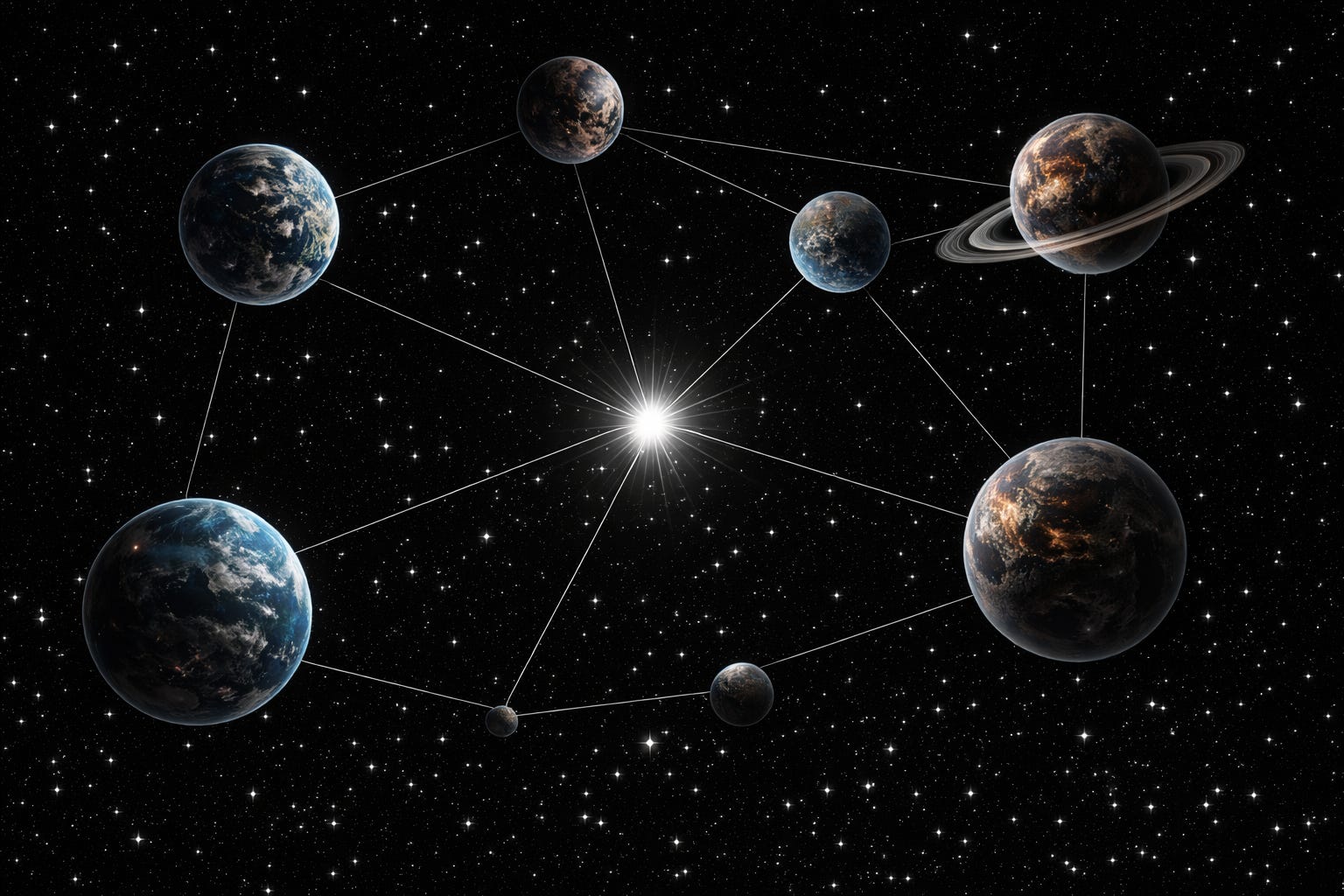
Agentic AI
Firstly, here are a few candidates for creating an agentic workflow programmatically, listed in no particular order. They all tackle our points above in one way or another:
The Agent Development Kit (ADK) from Google offers LLM agents for dynamic routing and workflow agents for predictable pipelines, sequential, loop, and parallel. Agents communicate through delegation in a hierarchy.
Microsoft’s Agents SDK provides a container framework with state, storage, and event management.
AWS introduced Strands Agents, another SDK for building tool-using autonomous agents.
Anthropic’s team published in 2024 a taxonomy distinguishing workflows (meaning LLMs orchestrated through predefined code paths) from agents (seen as LLMs that dynamically direct their own processes and tool usage), identifying patterns such as prompt chaining, routing, parallelisation, orchestrator-workers, and evaluator-optimiser loops.
OpenClaw positions itself as an open, modular agent orchestration layer with typed tool interfaces, structured memory, and pluggable execution backends.
And many, many more.
Each of these frameworks has arrived at a similar set of abstractions for multi-agent orchestration and sub-agent supervision, prompt chaining, pipelines, routing, evaluations, and cross-agent communication.
The IBM Research paper Agentic AI Needs a Systems Theory by Miehling et al. (2025) also highlights this from first principles, defining agency along three axes: 1) action generation, 2) outcome modelling, and 3) adaptation. They push for a systems-theoretic perspective to encapsulate all these concepts:
We emphasize that a systems-level perspective is essential for better understanding, and purposefully shaping, agentic AI systems.
Erlang Was First to Market
The design principles of Erlang’s Open Telecom Platform (OTP), designed in the 1980s at Ericsson, encode the separation of infrastructure from application-specific logic through behaviours, separating client-server patterns, state machines, event handling, and supervisors for fault tolerance.
The supervision tree is perhaps the most transferable concept. In Erlang, worker processes do the computation, and a supervisor monitors them, restarting them according to a strategy when they fail. The fail-detection strategies, for example, map well to what agentic systems need when an LLM call times out, a tool returns an error, or an agent hallucinates and needs to be reset.
As the Elixir community (based on Erlang) puts it, there is no actor keyword in Erlang or Elixir. Actors are referred to as spawned processes, sending messages, and receiving them with continuous loops that receive messages, execute corresponding code paths, update internal state, and repeat. Three interaction methods surface in the Elixir framework: calls (synchronous), casts (fire-and-forget), and raw message passing. To push our analogy to agentic systems: an agent calling a tool and waiting for a response is a call, an agent dispatching a task to a worker and moving on is a cast, and an agent broadcasting its state update to peers is raw message passing.
Maybe there is a chance for isomorphism between agentic AI and actor systems.
What Is an Actor?
An actor is the fundamental unit of computation in the actor model. It is a concurrent entity that encapsulates state, communicates exclusively through asynchronous messages, and can, upon receiving a message, do exactly three things: send a finite number of messages to other actors, create a finite number of new actors, and designate the behaviour to be used for the next message it receives. There is no shared memory, locks, or race conditions, by design.
Formally, an actor configuration C at time t is a tuple of agent A and the pending messages M to be processed:
When actor A processes message m from its mailbox, the transition function yields a new state s at t+1, a new set of outgoing messages, and possibly new actors:
Every agentic AI framework we see today implements, at its core, a variation of this. But is it necessary to approach it as a novel problem that requires rediscovery of these techniques?
The Actor/Agent Parallel
We can define an agentic system akin to an actor configuration. An agent a at the step t maintains the state s (its context window, memory, and cumulative reasoning). It receives a message m (a user prompt, a tool result, or output from another agent). It produces:
Where s at t + 1 is the updated state (new context), O is the set of output messages (responses to users, messages to other agents), and T is the set of tool invocations (which are messages to tool-actors that will return results as new messages m).
A multi-agent orchestrator is then a supervisor whose behaviour is:
Followed by monitoring each agent for completion, failure, or timeout, applying a restart strategy when needed:
This is almost one-to-one with the Anthropic orchestrator-workers pattern and the Akka supervisor.
Graph Neural Networks
This might seem out of the blue, but hear me out.
Consider Graph Neural Networks (GNNs), which have seen significant adoption for relational reasoning. The message-passing formulation of a GNN is:
Where h is the hidden state (memory) of the node v at layer l, N is the set of neighbours, psi is the message function, the operator over u is a permutation-invariant aggregation (sum, mean, max), and the wrapping operator is the update function.
Let’s have each node be an actor, with the agent state being the hidden state. It receives messages from neighbouring actors. It aggregates and updates its state. The GNN layer is one synchronous round of actor communication. Stack L layers, and you have L rounds of message passing.
Derouiche et al. (2025) in their survey of agentic AI frameworks identify the same structural pattern, noting that agent communication protocols like MCP (Model Context Protocol), A2A (Agent-to-Agent), and ANP (Agent Network Protocol) are converging towards a typed, discoverable actor messaging layer with JSON-RPC or REST semantics. The W3C service computing standards that they map these onto (WSDL, BPEL, WS-Coordination) are decades-old formulations for the same orchestration problem.
When we extend this GNN analogy to agents, a multi-agent system is a dynamic graph where agents are nodes, communication channels are edges, and each layer is a reasoning step. The global readout of a GNN:
Corresponds to the final aggregated output of the multi-agent system: the answer, the plan, the completed task.
Supervision Trees
To formalise this with math, consider a system of n agents, with individual probabilities R of correct execution, supervised by a supervisor that can detect and restart failures within a margin of error. The probability of at least one agent succeeding in a pool:
With supervision (where the supervisor restarts a failed agent up to k times):
For a hierarchical supervision tree with depth d, where each level can catch failures missed by the level below:
Erlang routinely achieves > 0.99999 (five nines). If we want agentic AI systems handling workflows in enterprise, as Deloitte’s Agentic Design considerations report proposes, we will need similar guarantees.
Is the Wheel Being Reinvented?
Somewhat yes in the sense that every agentic framework re-derives, from first principles, the abstractions that actor systems have: stateful nodes communicating via messages, hierarchical supervision, routing, and fault recovery strategies. The code book is different with: agent instead of actor and tool-call instead of message-send, or guardrail instead of supervisor strategy.
The actor inside an agentic system is somewhat different from a traditional actor. For example, Erlang executes deterministic code. An LLM-based agent is stochastic, creative up to hallucination, and fallible in ways that deterministic actors are not. The message an LLM produces in response to the same input might differ each time, sometimes even with tweaks of temperature (imagination). The state transition function is a neural network with billions of parameters, not a pattern-matched function clause (rules). An effect of this is that you cannot simply restart a failed LLM agent task and expect the same result on retry. You need to reason about prompt engineering, temperature, context window management, and whether the failure was due to hallucination, tool misuse, or cognitive limitations of the model.
With stochasticity acknowledged, actor systems give us an architecture where the supervisor does not need to understand the internals of the worker to restart it. It only needs to understand the contract, the message types, the expected outputs, and the failure modes. This is the point of behaviour abstraction in actor systems. Define the contract, let the callback module handle the specifics, and allow the system to live, possibly indefinitely and self-sufficiently, in a self-healing manner.
What is additionally interesting about an actor system of LLMs is that the notion of failure might need to be reworked. In Erlang, failure would mean an actual crash, and an error the actor cannot recover from, something technical, mechanistic. But for a chain of LLM agents, the failure can also be cognitive. Reasoning could collapse, and the way supervisors detect problems would need to account for such scenarios, perhaps through additional actors that do a health-check assessment of the progress being made.
What Should We Build?
Akka has already made the pivot, describing itself as a platform for building, running, and evaluating agentic systems. The agentic AI frameworks survey by Derouiche et al. maps modern agent protocols directly onto W3C service computing standards, drawing the line from WSDL to JSON-schema function registration, from BPEL to multi-agent orchestration workflows, and from WS-Coordination to session management.
If you are building agentic AI systems and you have not looked closely at the actor model, supervision trees, and OTP design principles, you might be missing out on a stable foundation to build upon. Stand on the shoulders of giants.
The math and architecture seem transferable to a T. Only the actor behaviour inside the system has changed. And that is exactly the part we should be innovating on, the intelligence within the actor, the reasoning within the node, the LLM inside the machine, while allowing the battle-tested infrastructure to handle the rest.
Your Thoughts and Questions
Do you see the parallel, and does it change how you think about building multi-agent systems? Have you worked with actor systems before, and does agentic AI feel like déjà vu?